


Exploring the Key Transformative and Emerging In-App Advertising Market Trends Today
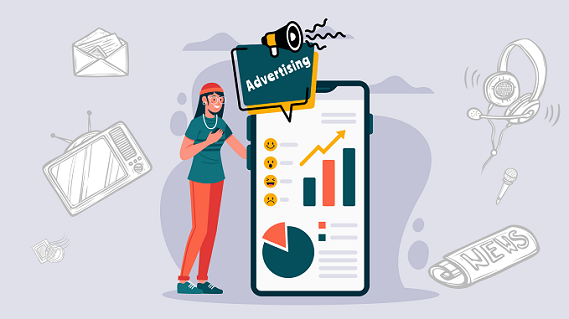
The in-app advertising market is one of the most dynamic sectors in all of digital media, constantly being reshaped by technological innovation, evolving user behaviors, and a shifting regulatory landscape. A close examination of current In-App Advertising Market Trends reveals a clear movement towards more interactive, data-driven, and privacy-conscious forms of advertising. The days of static, intrusive banner ads are numbered. The dominant trend today is the prioritization of user experience through value-exchange formats. Rewarded video advertising, where users voluntarily watch an ad to receive an in-app reward (like extra game lives, premium content, or virtual currency), has become the gold standard, especially in mobile gaming. This format is a win-win-win: users get valuable content for free, developers can effectively monetize their non-paying user base, and advertisers get the undivided attention of an engaged user for 15-30 seconds. Building on this, the trend towards "playable ads"—mini, interactive demos of other apps—continues to gain momentum as one of a highest-performing formats for user acquisition, offering a "try before you buy" experience that drives high-intent installs.
Perhaps the most significant and disruptive trend currently roiling the in-app advertising market is the industry-wide pivot towards a more privacy-centric ecosystem. For years, the market relied on persistent device identifiers, like Apple's IDFA (Identifier for Advertisers) and Google's GAID (Google Advertising ID), to track users across different apps and build detailed behavioral profiles for targeting. However, driven by consumer demand and regulatory pressure, both Apple and Google are moving to restrict access to these identifiers. Apple's App Tracking Transparency (ATT) framework, which requires apps to get explicit user consent to track them, has been a major earthquake for the industry, as a majority of users opt out. This has forced a major trend: the decline of user-level tracking and the rise of new measurement and targeting methodologies. These include a renewed focus on contextual targeting (placing ads based on the app's content, not the user's history), the use of aggregated and anonymized data, and the adoption of new privacy-preserving measurement frameworks like Apple's SKAdNetwork. This is a fundamental rewiring of the industry's plumbing.
In response to the challenges of a privacy-first world, another major trend is the increasing reliance on Artificial Intelligence (AI) and Machine Learning (ML) to drive campaign performance. With less granular user-level data available, advertisers and ad networks are turning to sophisticated AI models to make sense of the available contextual and aggregate signals. AI is being used to optimize ad creative in real-time, dynamically assembling the most effective ad components for a particular app environment. It is used for predictive modeling, analyzing vast datasets to predict which segments of users are most likely to convert, even without a persistent identifier. For publishers, AI-powered bidding mechanisms, such as in-app bidding (also known as unified auction), are becoming the standard. This technology allows multiple ad networks to bid on an impression simultaneously in a fair and transparent auction, which increases competition and maximizes the publisher's revenue for every ad slot. This trend towards AI-driven automation is making the entire ecosystem more efficient and effective, even in the face of data limitations.
Finally, a powerful expansionary trend is the application of in-app advertising principles to new and emerging platforms, most notably Connected TV (CTV). As viewers increasingly shift from traditional broadcast and cable television to ad-supported streaming services like Hulu, Roku Channel, and Peacock, their living room TVs have become a new frontier for app-based advertising. Each streaming service is, in essence, an app, and the ad breaks within their content are a form of in-app advertising. This trend is incredibly exciting for the industry because it combines the rich, data-driven targeting capabilities of digital advertising with the high-impact, lean-back, big-screen experience of traditional television. Advertisers can now use the same programmatic tools they use for mobile in-app campaigns to buy ad inventory on CTV, reaching households with a level of precision that was once impossible. This convergence of mobile and television advertising is a massive growth vector, bringing huge brand advertising budgets into the programmatic in-app ecosystem.
Explore More Like This in Our Reports:
Electronic Design Automation Software Market
