


Deployable Military Shelters evolve with Advanced Materials and Rapid Deployment Technologies
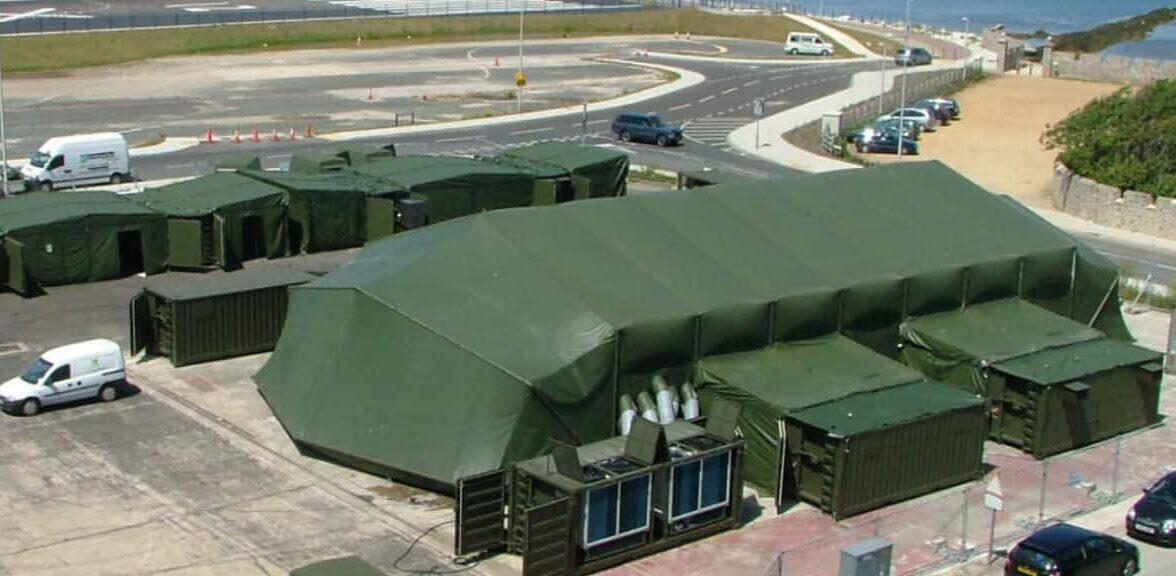
Deployable military shelters have become critical assets for modern armed forces and emergency response teams, providing versatile, quickly deployable, and resilient infrastructure in demanding operational environments worldwide. These shelters form the backbone of mobile command centers, field hospitals, equipment cover, and troop accommodations, offering protection and functionality in harsh and rapidly changing conditions. Innovations in materials, modular designs, and integrated systems are advancing the capabilities of deployable shelters to meet evolving military demands.
According to Straits Research, the global deployable military shelters industry was valued at USD 928.2 million in 2021. It is projected to reach USD 1,038.92 million by 2030, growing at a compound annual growth rate (CAGR) of 1.26% during the forecast period (2022–2030). The slowly increasing growth rate reflects steady defense spending alongside rising demand for lightweight, highly durable, and energy-efficient shelters designed for multi-domain operational requirements.
Key Technological Trends and Innovations
Recent advances in composite materials, such as carbon-fiber reinforced polymers and ballistic fabrics, have transformed the shelter landscape. These materials provide exceptional strength-to-weight ratios and enhanced protection against ballistic threats, blast waves, and environmental extremes while reducing logistics burdens. Several manufacturers are replacing traditional steel frames with lightweight aluminum or composite structures, cutting assembly times and increasing portability.
Modularity remains a defining trend, with shelters now designed as highly configurable units adaptable to various mission requirements. Modular wall panels, roof segments, and flooring systems can be rapidly assembled to create scalable shelters ranging from small personnel tents to aircraft hangars and mobile hospitals. Integrated environmental control systems now offer automated climate management for temperature, humidity, and air filtration, supporting operations in extreme cold, desert heat, or contaminated environments.
The integration of communication technologies and command-and-control systems into shelter designs is increasing operational effectiveness. Deployable shelters are increasingly equipped with embedded C4ISR (Command, Control, Communications, Computers, Intelligence, Surveillance, and Reconnaissance) capabilities, enabling real-time battlefield connectivity and situational awareness.
Leading Industry Players and Their Focus
Prominent companies shaping this sector include HDT Global (USA), General Dynamics Corporation (USA), Alaska Structures (USA), Losberger De Boer (Germany), DRASH (a Draper Company, USA), and Saab AB (Sweden). These firms invest in research and development, focusing on next-generation light-weight materials, rapid deployability, and technology integration for multi-mission applications.
HDT Global emphasizes hardened tactical shelters with superior blast resistance and ballistic protection, targeting rapid response military and humanitarian missions. General Dynamics offers a full spectrum of deployable shelter systems, leveraging decades of defense contracting expertise to tailor solutions for global military and peacekeeping operations.
Alaska Structures specializes in inflatable and soft-walled deployable shelters, well-suited for humanitarian aid and temporary field hospitals. Losberger De Boer pioneers large-scale base camp shelters primarily used by European military and NATO forces, focusing on scalable, modular infrastructure with advanced insulation and energy management technologies.
Saab AB contributes advanced protection technologies to shelters, including EMI (electromagnetic interference) shielding and integrated power solutions, critical for electronic warfare-ready bases and communications hubs.
Regional Dynamics and Market Insights
North America remains the largest regional user and producer of deployable military shelters, supported by high defense expenditure and ongoing modernization programs. The U.S. Department of Defense invests heavily in deployable infrastructure for forward operating bases, mobile command posts, and medical units, with procurement contracts awarded to domestic firms such as HDT Global and General Dynamics.
Europe, led by Germany, the UK, and Sweden, places increasing emphasis on sustainability, energy efficiency, and interoperability within NATO-aligned deployment frameworks. European shelter manufacturers like Losberger De Boer and Saab are developing smart shelter systems with predator drone detection integration and renewable energy powered HVAC systems.
Asia-Pacific, propelled by increased regional tensions and peacekeeping activities, is a burgeoning market for deployable military shelters. Countries like India, Japan, and South Korea are expanding their defense infrastructure with lightweight, modular shelters designed for rapid deployment and harsh environments. India-based firms such as UTS Systems are gaining contracts to supply deployable shelters for disaster response and medical units.
Recent Industry Developments
HDT Global recently unveiled a solar-integrated soft-wall shelter combining rapid deployability with energy harvesting capabilities, reducing reliance on fuel-based generators during extended field operations. The shelter received accolades for reducing carbon footprint while maintaining full operational capacity.
Losberger De Boer secured a NATO contract to supply modular base camp solutions with next-gen insulation materials to support high-altitude European deployments, emphasizing sustainability and energy efficiency.
General Dynamics announced a contract to provide hardened deployable shelters with integrated electronic warfare protection for U.S. Special Operations Forces, highlighting the importance of survivable, tech-enabled infrastructure in future conflicts.
Future Outlook and Growth Potential
Though growth is moderate compared to other defense sectors, deployable military shelters continue to evolve rapidly to meet the complex requirements of modern warfare and emergency response operations. Trends include enhanced integration with digital battlefield networks, scalability for multi-domain operations, and innovations in modular energy-efficient designs.
The rising frequency of humanitarian crises, pandemics, and disaster relief efforts also boosts demand for rapidly deployable medical shelters. Combined with ongoing military modernization programs worldwide, these factors ensure sustained growth.
Summary
Deployable military shelters continue transforming with advances in lightweight materials, modularity, and embedded technology, enabling forces to operate flexibly and sustainably in diverse environments. Leading manufacturers focus on rapid deployment, enhanced protection, and energy efficiency as strategic priorities for future defense readiness.
