


The Digital Transformation of Trading: The Global Algorithm Trading Industry Uncovered
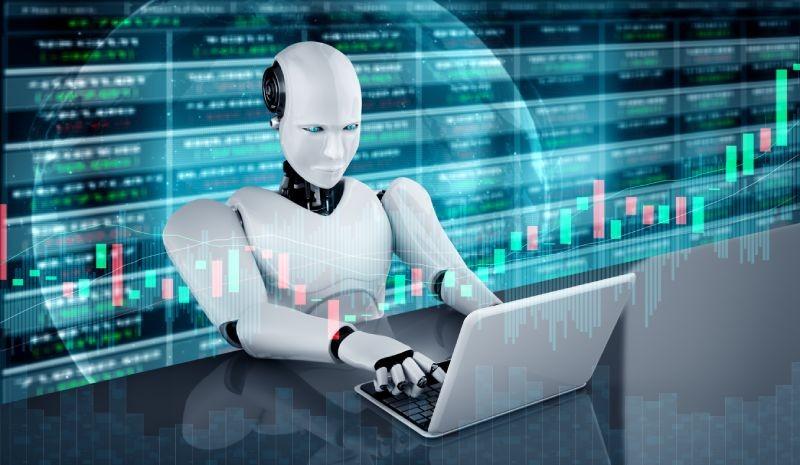
The global financial markets have undergone a profound and irreversible transformation over the past two decades, moving from the chaotic energy of open outcry trading pits to the silent, lightning-fast world of electronic execution. At the very heart of this new paradigm is the sophisticated and powerful Algorithm Trading industry, a sector dedicated to using complex computer programs and quantitative models to execute trades at a speed and scale that is humanly impossible. Algorithmic trading, often referred to as "algo trading," is the practice of using predefined sets of instructions—the algorithms—to make trading decisions, submit orders, and manage those orders after submission. These instructions can be based on a wide range of variables, including timing, price, volume, or complex mathematical models. The primary objectives are to minimize the market impact of large orders, reduce transaction costs, and capitalize on fleeting market opportunities. This industry has become the dominant force in modern markets, accounting for the vast majority of trading volume in equities, futures, and foreign exchange, fundamentally reshaping the roles of traders, brokers, and exchanges in the process and ushering in an era of unprecedented speed and efficiency.
The ecosystem of the algorithm trading industry is a complex interplay of various participants, each playing a distinct and critical role. The "buy-side" consists of institutional investors such as hedge funds, pension funds, mutual funds, and asset management firms. These entities use algorithmic trading primarily to execute their large investment orders efficiently (e.g., breaking a large order into smaller pieces to avoid moving the market) and to deploy proprietary trading strategies designed to generate alpha, or market-beating returns. On the other side is the "sell-side," which includes investment banks and brokerage firms. They provide algorithmic trading services to their buy-side clients and also engage in proprietary trading, often acting as market makers who provide liquidity to the market by continuously quoting buy and sell prices for various securities. A third, highly specialized group consists of the proprietary trading firms, often known as "prop shops" or high-frequency trading (HFT) firms, who trade with their own capital using ultra-low-latency strategies to profit from small, short-term market inefficiencies. This intricate web of players is supported by technology vendors, data providers, and the stock exchanges themselves, which provide the critical infrastructure for this electronic marketplace.
A significant and often-discussed subset of the industry is High-Frequency Trading (HFT). HFT is a specific type of algorithmic trading characterized by extremely high speeds, high turnover rates, and high order-to-trade ratios. HFT firms invest enormous sums in cutting-edge technology to gain a speed advantage measured in microseconds or even nanoseconds. This includes co-locating their servers in the same data centers as the stock exchanges' matching engines to minimize network latency, and using specialized hardware and high-speed networks like microwave transmission. The primary strategies employed by HFT firms include electronic market making, where they profit from the bid-ask spread by providing liquidity, and statistical arbitrage, where they identify and exploit tiny, short-lived price discrepancies between related securities or on different exchanges. HFT has been a subject of considerable debate, with proponents arguing that it enhances market liquidity and price discovery, while critics raise concerns about its potential to increase market volatility and create an uneven playing field. Regardless of the debate, HFT remains a dominant force, representing a significant portion of the daily trading volume and pushing the technological boundaries of the entire industry.
Looking to the future, the algorithm trading industry is set to be further revolutionized by the increasing integration of artificial intelligence (AI) and machine learning (ML). While early algorithms were largely based on predefined rules and statistical models, the next generation of trading algorithms is being built on more advanced AI techniques. Machine learning models can analyze vast amounts of structured and unstructured data—including market data, news sentiment, and even satellite imagery—to identify complex, non-linear patterns that are invisible to human traders or simpler models. Reinforcement learning, a type of AI where an agent learns to make optimal decisions through trial and error, is being explored to develop adaptive trading strategies that can learn and evolve in response to changing market conditions. This shift from static, rule-based systems to dynamic, learning-based systems represents the next major frontier for the industry. It promises to unlock new sources of alpha and create even more sophisticated trading strategies, but it also introduces new challenges related to model interpretability, risk management, and the potential for emergent, unpredictable market behavior.
Top Trending Reports:
