


Aluminum Welding Wire ER4943 For Better Weld Control | Kunliwelding
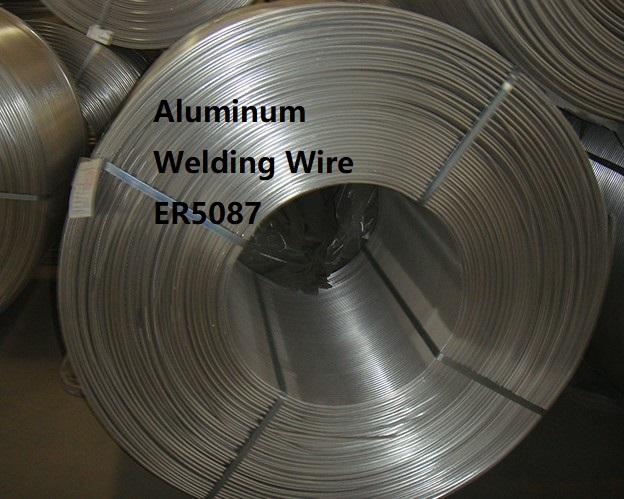
When aluminum fabrication involves demanding joints, choosing a filler metal is often about finding the right balance between weldability and finished joint performance. Aluminum Welding Wire ER4943 combines aluminum with controlled additions of magnesium and silicon, giving it characteristics suited to applications where strength, fluidity, and crack resistance all matter. For fabricators evaluating Aluminum Welding Wire ER4943, understanding how its alloy chemistry interacts with the welding process can help them make more practical decisions for different aluminum components. Its compatibility with both MIG and TIG welding also gives manufacturers flexibility when production requirements change.
Understanding The Role Of Alloy Chemistry
The behavior of an aluminum filler wire is closely connected to its chemical composition. ER4943 belongs to the aluminum-silicon filler family while incorporating magnesium to improve the mechanical characteristics of the deposited weld metal.
Silicon can contribute to lower melting behavior and improved weld-pool fluidity, helping the molten filler spread across the joint more smoothly. Magnesium, meanwhile, contributes to strength and hardness. The combination gives ER4943 a different performance profile from conventional silicon-only filler options.
This chemistry can be useful when a project requires more than simple weld appearance and places greater emphasis on the final mechanical characteristics of the joint.
Better Control During Aluminum Welding
Aluminum can be sensitive to heat input, joint preparation, and welding technique. Excessive heat may increase distortion, while unsuitable parameters can affect penetration, fusion, and overall weld appearance.
ER4943 is designed to provide controlled melting and good fluidity, which can help welders manage the molten pool more effectively. Its crack-resistant characteristics are another consideration for applications where thermal stresses and joint constraints may create challenges.
Of course, filler selection alone cannot guarantee a successful weld. Proper surface cleaning, shielding gas, torch positioning, wire feeding, travel speed, and current settings remain essential parts of the welding procedure.
Kunliwelding For Flexible Welding Applications
A useful filler wire should fit the production process as well as the base material. ER4943 can be used in both MIG/GMAW and TIG/GTAW welding, allowing fabricators to consider the process that best matches their component design and production volume.
MIG welding can be advantageous for higher-volume fabrication where continuous wire feeding supports productivity. TIG welding, on the other hand, can provide greater control for lower-volume work, detailed joints, and applications where appearance and precision are important.
This process flexibility allows ER4943 to be considered across different fabrication environments instead of being limited to one particular welding method.
Selecting Suitable Aluminum Base Materials
No filler wire should be selected without considering the base alloy. Aluminum grades vary in composition and respond differently to welding, so compatibility must be evaluated according to the specific project.
ER4943 has been described for use with several aluminum alloy families, including 1xxx, 3xxx, 4xxx, 5xxx, and 6xxx materials, with particular relevance to selected 6xxx applications.
For manufacturers, this means the selection process should consider base-metal chemistry, required strength, service environment, joint design, heat treatment requirements, and applicable welding specifications.
A careful match between filler and base material can help avoid unnecessary rework and provide a more predictable foundation for the welding procedure.
A Practical Option For Demanding Fabrication
ER4943 can be considered where fabricators want to balance weld-pool behavior with mechanical performance. Its combination of silicon and magnesium contributes to fluidity, strength, and crack resistance, while its suitability for MIG and TIG processes provides additional production flexibility.
Applications discussed for ER4943 include transportation, marine fabrication, aerospace components, construction structures, and industrial equipment. These fields often involve aluminum parts that must combine relatively low weight with dependable welded connections.
For buyers and welding professionals, the most effective approach is to evaluate ER4943 according to the actual alloy combination, joint configuration, welding method, and service conditions rather than treating it as a universal filler. To explore more aluminum welding wire products and related technical information, visit https://www.kunliwelding.com/ .
