


How to Verify Any Dog Leash Maker's Quality Control Process
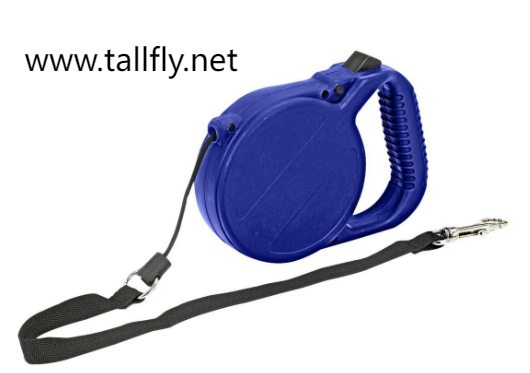
In the global pet accessories supply chain, a quality certificate attached to a shipment is often treated as a guarantee of product safety. It is not. Certification documents verify that a product was tested at one point in time under controlled conditions — they say nothing about the consistency of the production process that manufactured the ten thousand units sitting in the shipping container. Understanding what genuine quality control looks like inside a serious Dog Leash Factory requires looking beyond the document and into the process architecture that produces repeatable results across every batch, every month, and every year.
Incoming Material Inspection: Quality Before Production Starts
Effective quality control begins before a single machine runs. Raw material inspection — testing webbing from each supplier roll, verifying hardware dimensions from each incoming batch, checking thread tensile ratings against specification — establishes the foundation on which all downstream quality depends. Manufacturers that skip incoming inspection and rely on supplier certificates are gambling that supplier production consistency matches documentation, a gamble that field failure data suggests is frequently lost.
Webbing incoming inspection typically includes width measurement, weight per linear meter, tensile break testing on sample lengths, and colorfastness assessment under wet and dry rub conditions. Hardware incoming inspection covers dimensional checks against engineering drawings, plating thickness measurement using X-ray fluorescence or magnetic induction equipment, and gate spring tension verification on snap hooks. Thread incoming inspection verifies tensile strength and confirms that chemical treatments — bonding agents, UV stabilizers — are present at specified levels.
In-Process Controls During Manufacturing
Quality assurance during active production addresses the sources of variation that incoming material inspection cannot catch: machine calibration drift, operator technique inconsistency, environmental changes affecting material behavior, and production speed pressures that encourage shortcuts. Statistical process control (SPC) methods, applied to key measurable variables like stitch density, webbing tension, and hardware crimp force, provide real-time signals when a process is drifting outside acceptable limits before defects are produced at scale.
Regular calibration verification of assembly equipment — sewing machines, crimping presses, cutting tools — prevents the gradual performance drift that occurs in all mechanical systems over operating time. Machines that are not calibrated on a defined schedule produce units that appear visually identical to conforming product but fail at lower load levels due to inconsistent stitch tension or inadequate hardware engagement.
Finished Product Testing: The Final Gate
Finished product testing provides the last verification layer before a product reaches the customer. Tensile testing on complete assembled leashes — applying load through the snap hook and handle simultaneously — verifies that all components and joints perform as a system, not merely as individual elements. This matters because individual component test results do not always predict system-level performance; a webbing-hardware interface can fail at loads well below the individual component ratings if assembly quality is inconsistent.
Colorfastness testing on finished products, rather than raw materials alone, accounts for the effect of stitching, hardware contact, and folding on dye stability. UV aging tests — exposing samples to defined doses of UV radiation in controlled chambers — simulate years of outdoor exposure and reveal material degradation pathways that fresh samples do not exhibit.
Traceability and Batch Documentation
Comprehensive quality systems maintain traceability records linking finished product batches to specific raw material lots, production dates, machine identifiers, and operator records. This traceability enables precise identification of affected units when a quality issue is discovered, limiting recall scope and enabling root cause analysis that can prevent recurrence. Manufacturers without traceability systems must treat any quality issue as potentially affecting all units ever produced, a costly and reputationally damaging position.
Taizhou Opey Pet Products Co., Ltd. maintains batch-level traceability documentation across all production stages and makes testing records available to buyers and brand partners as part of its standard sourcing transparency commitment, recognizing that documented quality systems build the long-term supply relationships that benefit both manufacturer and customer. Buyers seeking suppliers with documented, auditable quality control systems and transparent production records can begin their evaluation at https://www.tallfly.net/ .
